Cyclone Murasu: Telangana Issues Red Alert for Suryapet, Khammam and Bhadradri as Storm Trajectory Shifts
State disaster management authorities have lifted severe weather warnings in two previously affected Telangana districts while issuing immediate red alerts for Suryapet, Khammam, and Bhadradri. The cascading trajectory of Cyclone Murasu continues to prompt emergency preparedness protocols across southern India.

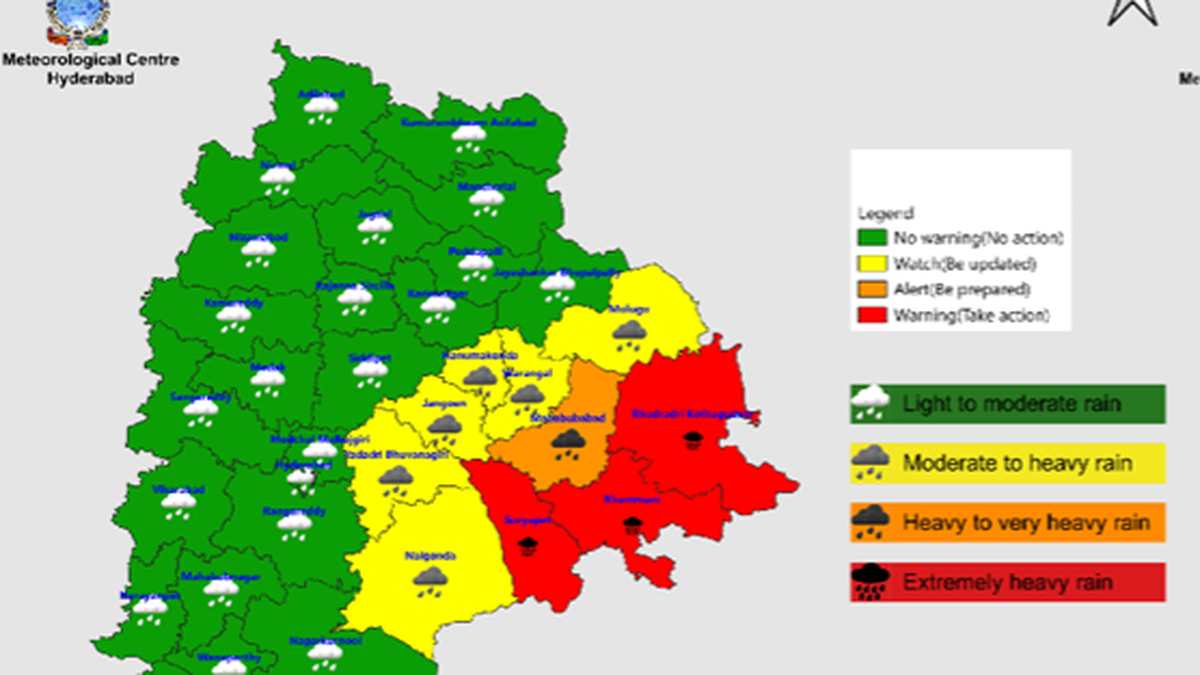
- Red alerts have been officially withdrawn from two initial Telangana districts as the storm system shifts geographic focus.
- Suryapet, Khammam, and Bhadradri are now under maximum-severity warnings due to anticipated torrential downpours.
- Emergency response teams remain deployed across vulnerable zones to mitigate potential flooding and structural hazards.
State emergency authorities in Telangana have revised severe weather advisories as Cyclone Murasu progresses inland, lifting red alerts in two previously impacted districts while immediately imposing maximum-severity warnings for Suryapet, Khammam, and Bhadradri on November 3. The meteorological pivot places these eastern and central corridors directly in the path of anticipated torrential rainfall and high-velocity winds associated with the dissipating yet volatile cyclonic system.
This rapid recalibration of disaster management zones underscores the unpredictable nature of seasonal tropical disturbances tracking across the region. Meteorological models indicate that as moisture-laden air masses push further inland, localized topographical features continue to influence heavy precipitation bands, prompting swift administrative shifts to safeguard civilian populations residing in low-lying and flood-prone terrain.
According to reports by The Hindu, regional disaster response forces have been dynamically repositioned to maintain continuity of relief operations as the warning perimeter expands. Local municipal commissioners and district collectors have been instructed to ensure uninterrupted communication channels, pre-position rescue equipment, and maintain high alert statuses across all designated emergency shelters.