Himalayan Crisis Escalates as Bhutan Glacial Lake Outburst Highlights Rising Climate Vulnerability
A recent glacial lake outburst flood in Bhutan has intensified concerns regarding escalating ecological threats across the fragile Himalayan mountain range. Experts warn that accelerated global warming is rapidly destabilizing high-altitude water bodies, putting millions of downstream residents at risk.

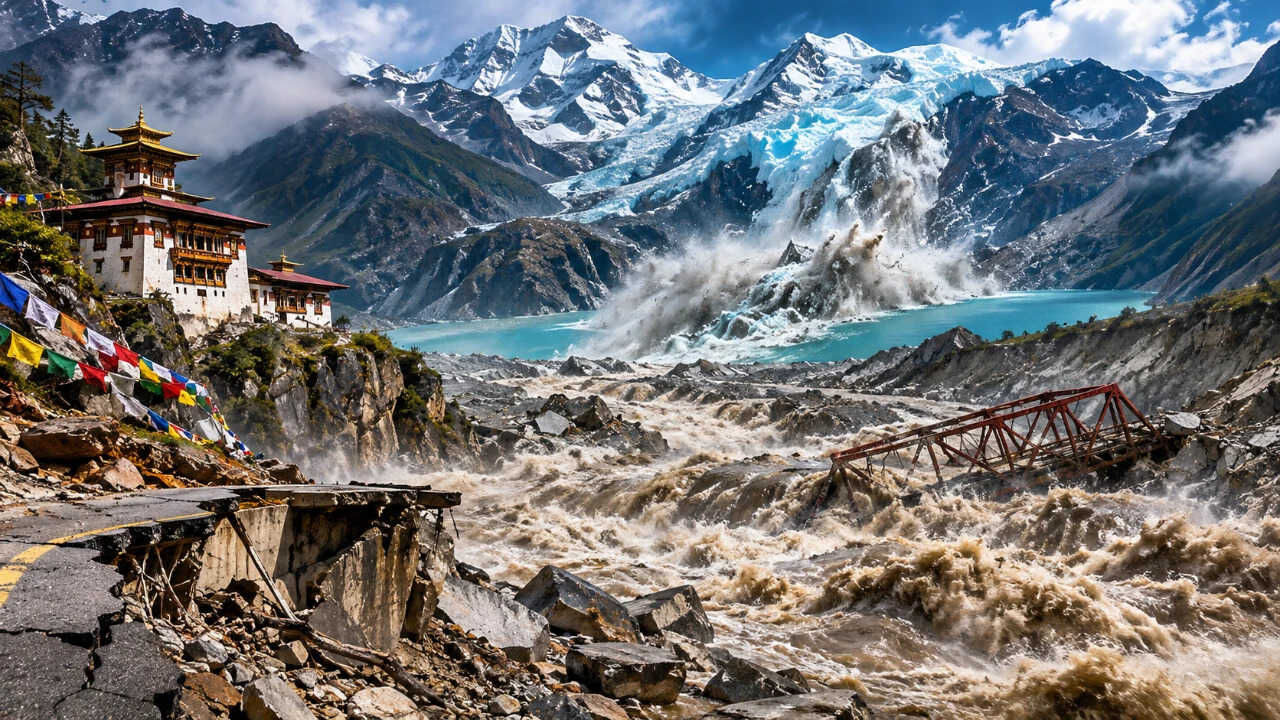
- A severe glacial lake outburst in Bhutan has laid bare the mounting environmental dangers threatening the entire Himalayan region.
- According to findings highlighted by the Times of India, rising global temperatures are dangerously accelerating the melting of regional ice masses.
- Policymakers and disaster management authorities are urgently calling for enhanced early-warning systems and cross-border mitigation strategies.
A sudden and destructive glacial lake outburst in the mountainous terrain of Bhutan has sent shockwaves across the region, laying bare the escalating vulnerability of Himalayan ecosystems to rapid climate change. The unexpected deluge underscores an intensifying pattern of environmental hazards that threaten downstream communities, critical infrastructure, and fragile river basins spanning international borders.
This alarming incident is part of a broader, accelerating trend across the Himalayas, where rising global temperatures are causing high-altitude glaciers to recede at unprecedented rates. The resulting accumulation of meltwater behind unstable moraine dams creates ticking time bombs, transforming once-stable glacial basins into volatile threats capable of unleashing catastrophic floods with little to no warning.
According to detailed reports by the Times of India, environmental scientists and disaster response agencies are sounding the alarm over the severe lack of adequate preparedness infrastructure in these remote zones. Experts emphasize that traditional risk models are no longer sufficient to cope with the frequency and ferocity of modern climate-induced disasters, urging immediate regional cooperation and data-sharing mechanisms.