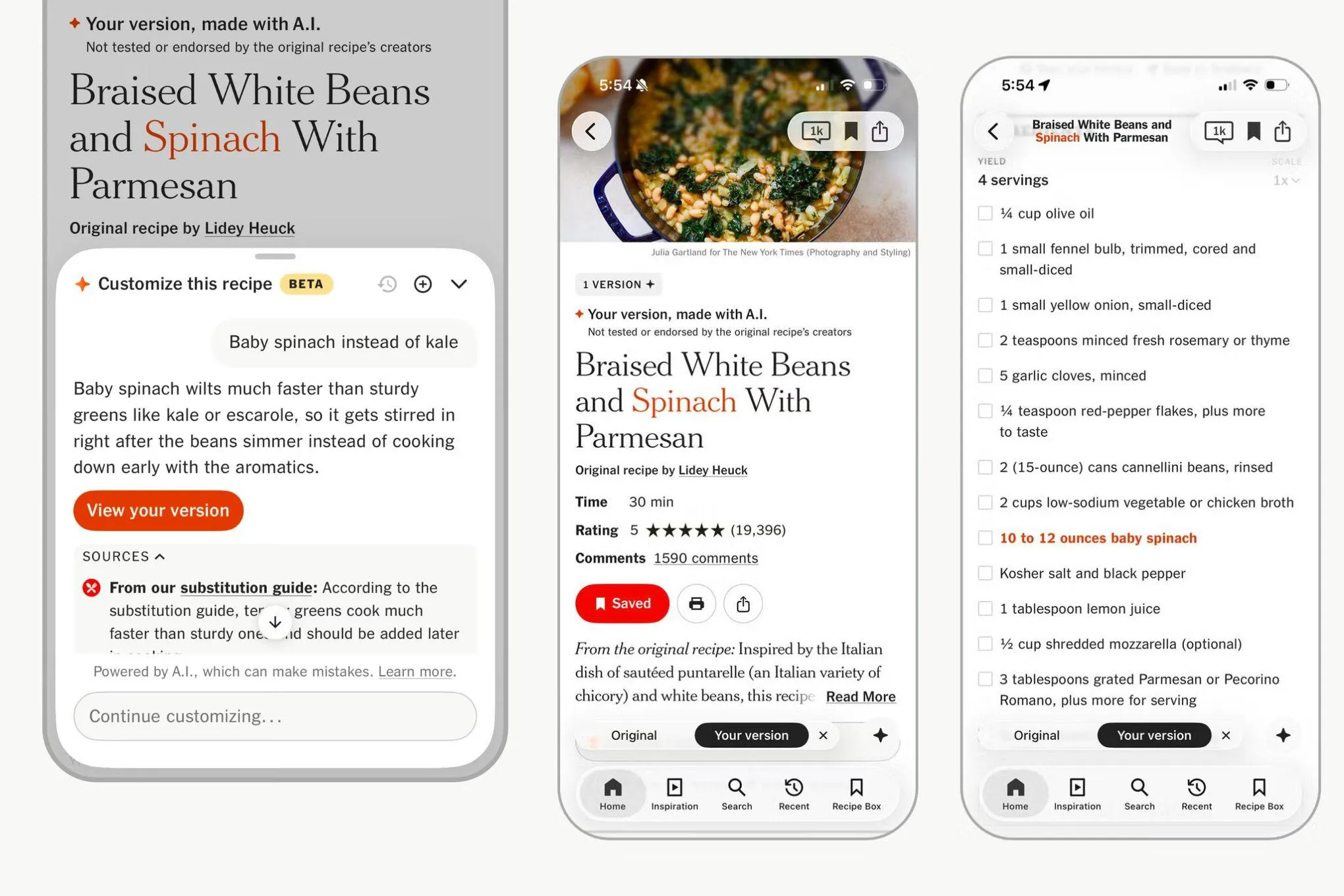
The New York Times has officially initiated a quiet rollout of an experimental artificial intelligence capability within its immensely popular Cooking application, designed to assist users in altering ingredients and instructions on the fly. Unveiled late last week by senior editor Genevieve Ko, the software update introduces algorithmic assistance to a platform historically celebrated for its meticulously tested, human-curated culinary archive.
This digital pivot arrives at a time when legacy media organizations are aggressively exploring generative algorithms to boost user engagement and retention. However, the introduction of automated alterations strikes at the core of what loyal subscribers value about the publication's gastronomic vertical—namely, reliable, chef-vetted instructions that guarantee consistent results without computational intervention.
According to detailed reports by technology publication The Verge, the feature has quickly stirred up significant friction and skepticism among digital communities who rely on the platform. Critics have voiced strong concerns that automated tweaks undermine the nuanced culinary expertise embedded in the original journalism, potentially sacrificing flavor, texture, and cultural authenticity for the sake of automated convenience.
As the beta trial continues to unfold, executive leadership at the publication will likely evaluate subscriber feedback to determine whether the algorithmic tool warrants a permanent rollout or warrants a swift retreat. The ongoing controversy serves as a stark reminder of the delicate balance media institutions must maintain when introducing disruptive technologies to deeply loyal, tradition-bound consumer bases.