Congress Defends Kharge's Critique of Modi, Clarifying Ideological Focus Over Personal Attack
- •Congress asserts that Mallikarjun Kharge's remarks targeted the ruling party's ideological foundation rather than attacking the Prime Minister personally.
- •General Secretary K.C. Venugopal emphasized the historic connection between the Bharatiya Janata Party and the Rashtriya Swayamsevak Sangh.
- •The clarification comes amid heightened political sparring between India's major national political factions.
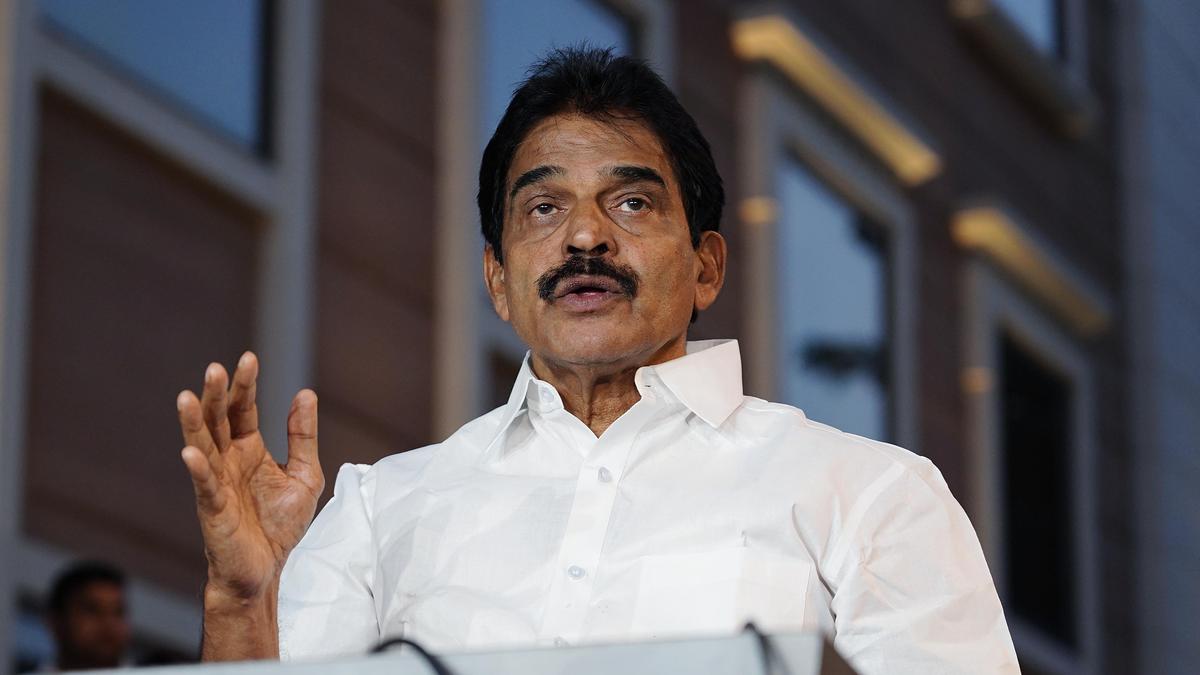
NEW DELHI — Senior Congress leadership has robustly defended a recent remark targeting Prime Minister Narendra Modi by party president Mallikarjun Kharge, insisting the statement constituted a systemic ideological critique rather than a personal grievance. The clarification was issued by Congress General Secretary K.C. Venugopal amid a rapidly intensifying war of words between the ruling administration and the opposition.
The controversy underscores the deep-seated ideological friction that perpetually defines India's national political arena, where policy debates frequently pivot toward foundational philosophies and organizational lineages. At the heart of the discourse lies the relationship between the ruling Bharatiya Janata Party and its ideological parent organization, a dynamic that opposition figures frequently invoke to question the administration's policy direction and governance framework.
According to reports published by The Hindu, Mr. Venugopal moved quickly to dispel any misinterpretations of the Congress chief's comments, explaining to media representatives that the messaging was exclusively tied to organizational ancestry. \u201cIdeologically, of these Bharatiya Janata Party people, the parent is the Rashtriya Swayamsevak Sangh and Kharge ji means that only,\u201d the senior Congress official stated, aiming to reframe the narrative around institutional lineage rather than individual character.
As political momentum builds ahead of upcoming electoral battles and legislative sessions, both major factions are expected to double down on their respective rhetorical strategies. Observers anticipate that ideological framing will remain a central pillar of political campaigning, with national parties continuously scrutinizing each other's foundational philosophies to sway public perception.