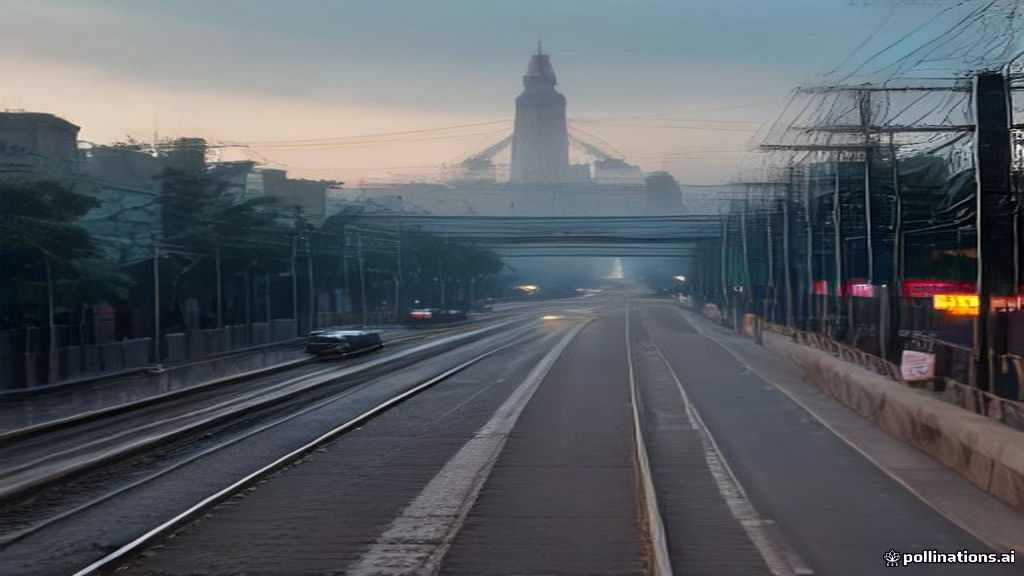
Delhi Air Quality Plummets to Very Poor as Smog Chokes Capital, Triggering Emergency GRAP Restrictions
Delhi's air quality deteriorated sharply over a 48-hour period, plunging the metropolitan region into the 'very poor' category with an Air Quality Index reading of 324. In response to the escalating environmental hazard, authorities have officially enforced Stage-II of the Graded Response Action Plan.


- Delhi's AQI surged dramatically from 117 on October 31 to 324, crossing into the hazardous 'very poor' spectrum.
- The Commission for Air Quality Management formally triggered Stage-II of the Graded Response Action Plan to curb further pollution spikes.
- The rapid deterioration highlights the recurring seasonal vulnerability of the National Capital Region's air basin.
The National Capital Region experienced a severe environmental setback as toxic smog enveloped the metropolis, driving the Air Quality Index (AQI) to a concerning 324 and firmly establishing a 'very poor' atmospheric condition across the urban landscape. The sudden degradation of ambient air conditions prompted immediate administrative intervention, forcing regulatory bodies to activate stringent emergency protocols to mitigate public health risks.
This alarming escalation marks a swift and aggressive downward spiral in regional air hygiene, continuing a notorious seasonal pattern that plagues northern India during the transition into colder months. Environmental analysts noted that the pollution levels had maintained a moderate reading of 117 as recently as October 31, before compounding weather patterns and localized emissions rapidly accelerated the accumulation of particulate matter within a span of just two days.
According to official assessments cited by The Hindu, the subcommittee operating under the Commission for Air Quality Management (CAQM) acted swiftly upon observing the deteriorating metrics. After recording a breach into the 'poor' tier at 261 on November 1, authorities determined that immediate preemptive measures were unavoidable to prevent the situation from deteriorating into severe or emergency categories.